
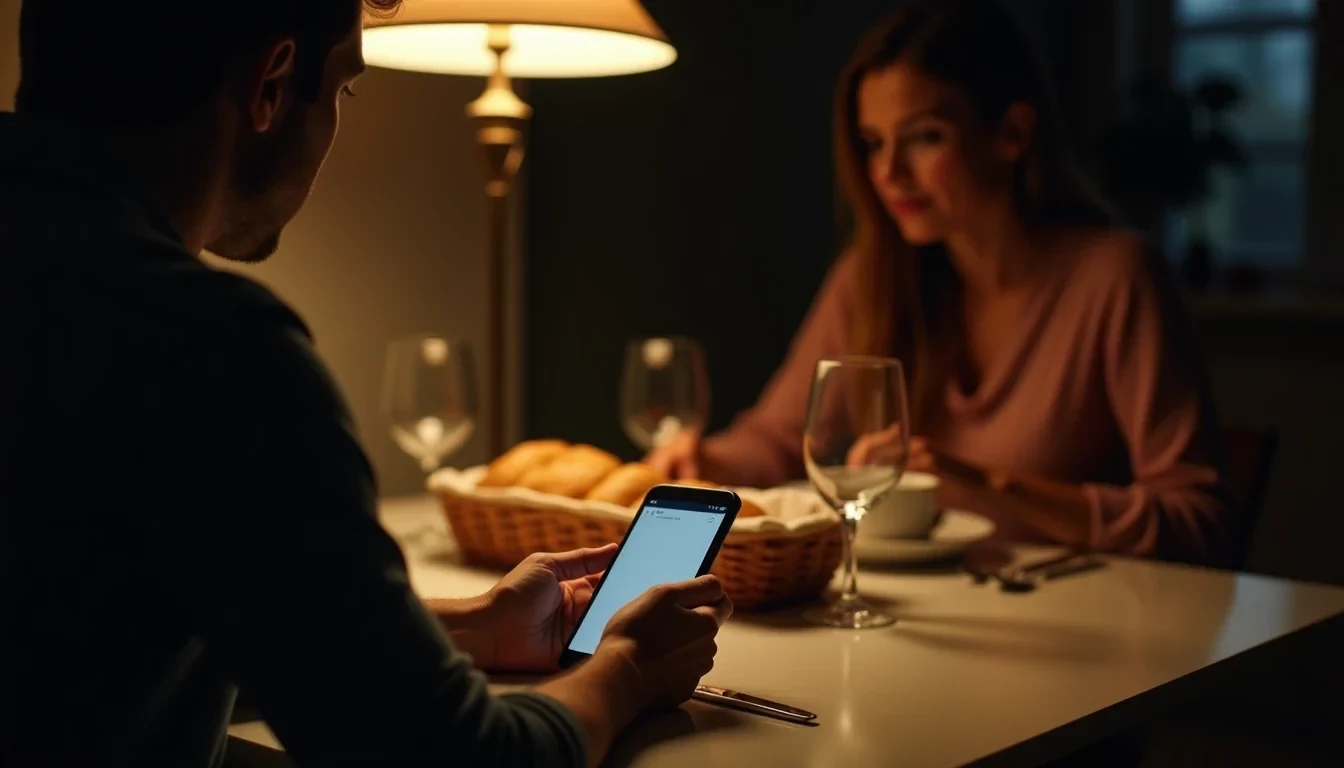
He sits across from her at the table, nodding at the right moments, but his thumb keeps drifting back to the phone face-down beside the bread basket. A message lights up. He looks. She keeps talking. By the time he looks up properly, the thread of the conversation has gone cold, and so has she.
That little glance does more damage than most people admit. Phubbing, the neat ugly word for choosing a screen over the person in front of you, reads like a habit, not a grand betrayal. This makes it easy for phubbing to slip into relationships and hollow them out quickly.
The insult is in the pause
Phones do not need to be used loudly to make a point. A hand reaching for the screen mid-story, eyes dropping during dinner, a quick check while your partner is mid-sentence—these small gestures carry a blunt social meaning. They tell the other person, even if nobody says it out loud, that whatever is happening on the phone has priority.
Phubbing often shows up in the ordinary places couples spend time together. One person scrolls, half-listening at a braai. A movie is paused by endless notifications. A bedtime chat is interrupted by one more message, then another. The damage is not dramatic in the moment, which is exactly why people underestimate it.
The word itself is a blend of “phone” and “snubbing.” It names a real experience of being physically present with someone who is mentally elsewhere.
The drop in satisfaction happens fast
A 2023 meta-analysis in Computers in Human Behavior found that when people feel phubbed by their partner, relationship satisfaction drops immediately. This happens right away, not after months of neglect or a slow emotional unraveling.
This matters because satisfaction is not a decorative extra in a relationship. It shapes how people interpret ordinary behavior. A partner who feels seen will shrug off a missed call, a late reply, a distracted evening. A partner who already feels sidelined reads the same behavior as proof that they are sliding down the list.
Earlier work by Roberts and David in 2016 pointed in the same direction. Their findings linked partner phubbing to lower relationship satisfaction through conflict around phone use and feelings of being devalued. People do not simply dislike the phone; they resent what it says about their place in the room.
Trust and intimacy do not survive constant distraction
Once phubbing becomes routine, the relationship starts to lose texture. Trust thins out first, then intimacy. The easy, unforced sense that the two of you are in the same emotional space also fades.
It is hard to build closeness when one person is always half out the door, mentally speaking. Shared conversation gets chopped into fragments. Private jokes get interrupted. Small disclosures, the kind that make a couple feel like a unit, stop arriving naturally because the room does not feel safe or attentive enough for them.
Conflict often follows. Sometimes it is direct, with arguments about the phone itself. Sometimes it is quieter, a sour mood, a sharp comment, a little revenge-scroll of one’s own. Either way, the message has already landed: the phone is winning time meant for the relationship.
The deeper wound is attachment anxiety
A 2020 study by Wang, Yang, and Zhang found that phubbing is linked to attachment anxiety. This is the nervous, often humiliating feeling that your partner might be losing interest, even when they are only distracted for a minute.
This is where the habit turns nasty. The phubbed partner is not only irritated. They start reading the behavior as evidence of rejection. They wonder if they are boring, too demanding, not attractive enough, not interesting enough—not enough, full stop. The brain fills in the blank with the worst possible explanation.
For some people, that pressure turns into hypervigilance. They begin watching the phone instead of the face. They notice every buzz, every glance, every hand movement. They ask for reassurance. They replay conversations. They get prickly about things that once would have been harmless. The relationship starts living under surveillance, and nobody relaxes in that atmosphere.
What to do before the habit hardens
The fix is not a grand speech about being more present. Most couples do not need a lecture. They need rules that make the right behavior easier.
A few practical moves work better than vague promises:
- Keep phones out of sight during meals, not just face down. Out of sight is clearer.
- Create phone-free stretches at home, especially at bedtime and over breakfast.
- Try phone stacking at a braai or dinner with friends. The first one to check pays for the next round, or the coffee.
- Say out loud when you are putting the phone away, so your partner hears the intention, not just the absence.
- Use a basket or drawer in the room if the phone keeps becoming a reflex.
In South African social life, where dinners, stokvel catch-ups, family visits, and long braai conversations still carry real weight, these habits matter more than people like to admit. Presence is part of the currency.
How to raise it without starting a war
Do not open with accusation. “You are always on your phone” makes people defensive before they have processed the complaint. The better move is to name the feeling and tie it to a specific moment.
Try lines like these:
- “I feel disconnected when we are talking and your phone keeps pulling your attention.”
- “I miss you when I am speaking and you are scrolling.”
- “Can we keep the phones away for half an hour and actually talk?”
That kind of language keeps the focus on behavior, not character. It also leaves room for the other person to explain themselves. Sometimes phone use is habit. Sometimes it is work pressure. Sometimes it is a nervous tic with a glossy screen attached. None of those excuses make the behavior harmless, but they do shape the solution.
The point is not to win an argument about devices. The point is to stop teaching your partner that they have to compete with a screen for basic attention. Once that pattern settles in, it stops feeling like a minor habit and starts feeling like a quiet form of abandonment.